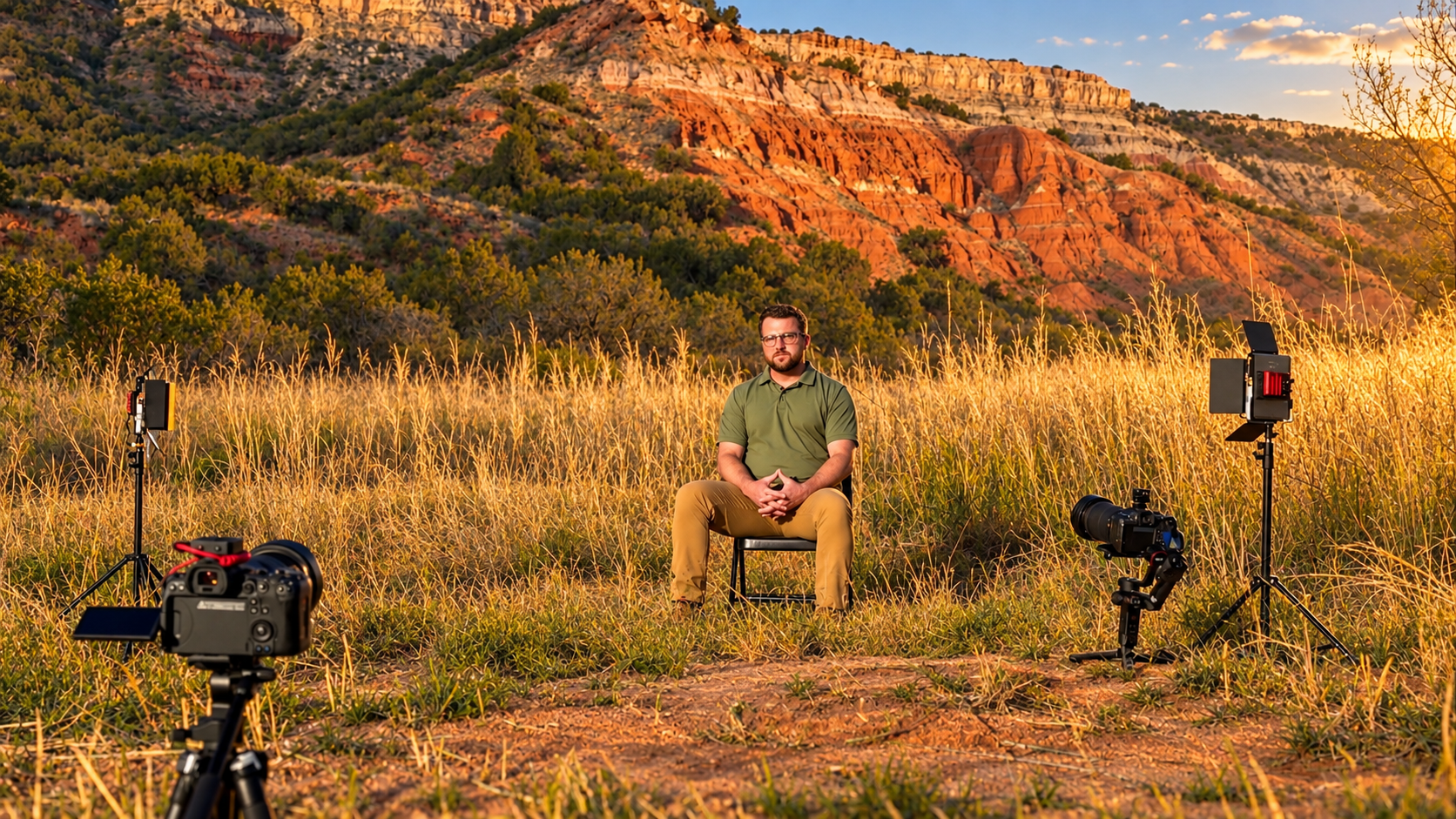
Amarillo Video Production: What Experience Actually Matters
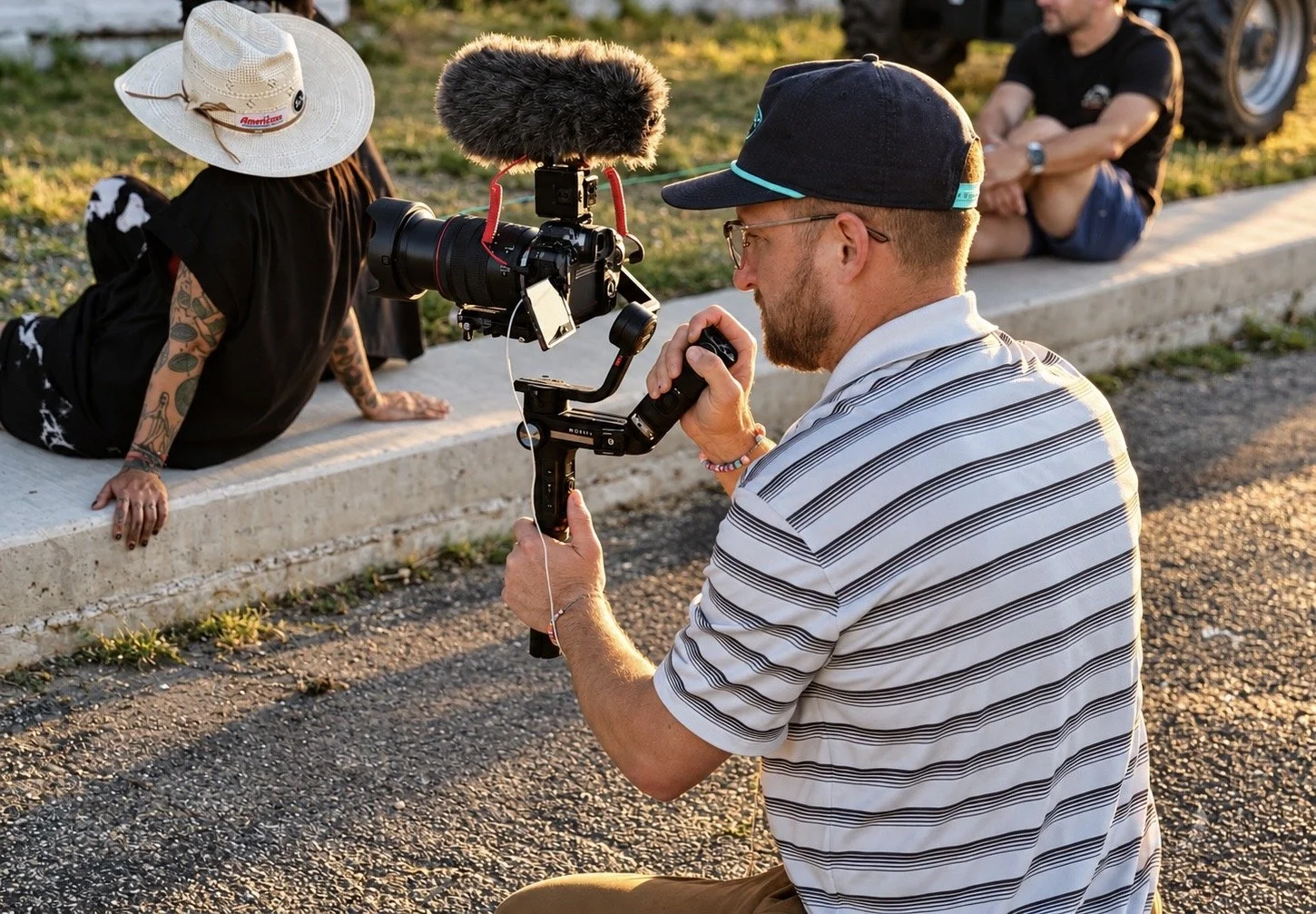
A good camera does not make someone a filmmaker.
Neither does an expensive lens, a drone, a polished website or a reel full of slow-motion footage.
Video production starts before the camera turns on. You have to understand what you are looking at, recognize what matters, communicate with the people in front of the camera and know why the finished film needs to exist in the first place.
That is where experience matters.
I’m Cole Brakebill, Creative Director of Roosevelt Road Productions in Amarillo, Texas. My route into video production was not a straight line through film school and into an agency. It moved through custom automotive work, skilled trades, aerospace, music production, documentary filmmaking, western culture and years of making things with my hands before filmmaking became my full-time creative focus.
Those experiences affect how I approach every production now.
They taught me how to look closer.
I Know What Skilled Work Looks Like
Before filmmaking became my profession, much of my career was spent around people who built, repaired, painted and manufactured things.
I studied automotive body and paint, opened a custom paint and body shop when I was young, worked in the custom automotive industry and later spent more than a decade in aerospace.
That matters when I walk into a fabrication shop, manufacturing facility or industrial business with a camera.
I understand that the interesting part is not always the most obvious part.
It might be the preparation nobody sees.
The way an experienced welder positions a part before striking an arc.
The sequence a technician follows without consciously thinking about it anymore.
The tolerances, habits, tools and small decisions that separate skilled work from average work.
Someone unfamiliar with that environment may film what looks impressive.
I want to understand why it is impressive.
That distinction has become important in my commercial and industrial video work.
My Job Is Not Just to Film the Business
A business owner usually knows far more about their company than they can explain in a thirty-second commercial.
That creates a storytelling problem.
Years of knowledge have to be distilled into something another person can understand quickly without reducing the company to generic marketing language.
“Quality.”
“Service.”
“Family-owned.”
“Committed to excellence.”
Those phrases can describe thousands of companies.
The real story is usually underneath them.
Why does the process work?
What does the company understand that its customers may not?
What does an experienced employee notice that someone outside the industry would miss?
Why does a customer continue coming back?
That is what I am trying to find during a production.
A commercial film should not simply tell people that a business is good.
It should give them enough evidence to reach that conclusion themselves.
Documentary Filmmaking Changed How I Conduct Interviews
One of the most important projects in my development as a filmmaker was In Open Air, a three-part documentary series I directed and produced for Panhandle PBS about public art in Amarillo and the surrounding region.
That project forced me to work differently.
Long-form documentary filmmaking does not allow you to hide behind attractive footage.
You need structure.
You need context.
You need interviews that actually say something.
You need to recognize when somebody gives you the sentence the entire scene was waiting for.
And sometimes the most important part of an interview comes five minutes after the question you thought mattered.
I learned to listen differently.
That carries directly into commercial video production.
When I interview a business owner, employee or customer, I am not simply working through a checklist of questions. I am listening for the idea beneath the answer.
That might become the opening of the film.
It might become the final line.
It might change the direction of the entire edit.
Real people rarely speak like advertising copy, and I do not want them to.
I want them to sound like themselves.
I Can Carry a Project From the Idea Through the Final Edit
My work frequently involves much more than operating a camera.
Depending on the production, I can be involved in:
Concept development
Creative direction
Interview development
Directing
Cinematography
Location production
Drone footage
Audio recording
Editing
Color correction and grading
Sound design
Music selection
Original music
Titles and graphics
Social media cutdowns
Vertical and horizontal deliverables
AI-assisted visual production when it serves the project
The advantage is continuity.
The conversation we have before production does not disappear when the project moves to another department.
I know why a shot was captured because I was there when we decided we needed it.
I know what an interview was supposed to accomplish because I helped develop the questions.
I know why a musical change happens at a certain moment because I am also making decisions about the edit.
For the right project, that creates a very efficient production process.
Twenty Years of Music Changed the Way I Edit Film
Music came before professional filmmaking for me.
I have spent more than two decades writing, recording and producing music through Roosevelt Road and my solo work as Cole Younger.
That experience fundamentally changed the way I understand editing.
Film has rhythm.
A cut can feel early.
A shot can hang too long.
An interview needs space after an important sentence.
Music can create tension before the viewer consciously understands why.
Silence can be more powerful than another layer of sound.
Sometimes a sequence needs energy.
Sometimes it needs restraint.
I think about those decisions musically even when there is no music playing.
That background also allows original songs, custom music and jingles to become part of a larger production when a project calls for them instead of treating music as something selected at the very end.
Western Stories Are More Than an Aesthetic to Me
Some of my favorite projects exist around rodeo, ranching, horses and western culture.
That includes my work with world champion rodeo athlete Shad Mayfield, films including Money $znand Homegrown, and a project with Wilson Cattle Company centered around their stud horse Tic Tick Boom Boon.
I approach those projects differently because I know that western culture is more than cowboy hats, dust and dramatic sunsets.
The details matter.
Preparation matters.
Family matters.
Bloodlines matter.
The quiet moments before competition matter.
What happens outside the arena can tell you more about someone than what happens during the few seconds everybody came to watch.
That is what interests me.
When I filmed Shad, I was not only interested in documenting a champion competing. I wanted to understand the person and the life surrounding the competition.
When I worked with Wilson Cattle Company, the horse was obviously the centerpiece, but the production still had to communicate presence, movement, breeding, environment and the character surrounding him.
That is storytelling.
Not simply coverage.
I Know When the Camera Should Get Out of the Way
Some productions benefit from elaborate cinematography.
Others do not.
Sometimes the best decision is putting the camera in the right place, creating an environment where somebody becomes comfortable and letting the moment happen.
One thing documentary work taught me is that filmmakers can destroy authenticity by trying too hard to manufacture it.
The camera should not always announce itself.
The edit should not always demonstrate how clever the editor is.
A drone shot should not exist merely because we brought a drone.
Every production decision needs a reason.
That does not mean the work should look plain.
It means style needs to serve the story.
Small Productions Can Still Think Big
Roosevelt Road is an independent production company.
I do not try to pretend it is a fifty-person studio.
That would miss the advantage of what it actually is.
Clients work directly with the person developing the concept, operating the cameras and shaping the finished film.
That can make a production more flexible and personal while still producing work designed for commercial use.
The scale should fit the assignment.
Some projects need one filmmaker moving quickly.
Others need additional cameras, crew, locations, talent or more complicated production planning.
The objective comes first.
Then we determine what the production actually requires.
What Roosevelt Road Can Produce
My work currently spans several areas of video production.
Commercial and Brand Films
Films that introduce a company, communicate its identity, explain what it does and show the people behind the business.
Industrial Video Production
Video for manufacturers, fabricators, skilled trades, construction companies and businesses where understanding the work matters.
Customer Interviews and Testimonials
Natural conversations designed to let customers describe their experiences in their own words.
Documentary Production
Interview-driven and observational storytelling for organizations, communities, individuals and subjects that need more room to develop.
Western, Agriculture and Equine Films
Productions centered around ranching, rodeo, horses, agriculture and western businesses.
Promotional and Social Video
Shorter films and campaign content built for websites, advertisements and social platforms.
Music Videos
Concept-driven visual work developed around the identity, rhythm and meaning of a song.
Original Music and Custom Audio
Original songs, instrumental music, jingles and custom audio developed when the production benefits from having its own sound.
What I Actually Bring to a Production
I do not think my advantage is owning cameras.
A lot of people own cameras.
My advantage is the combination of experiences behind them.
I understand craftsmanship because I have spent much of my life making things.
I understand industrial environments because I have worked inside them.
I understand music because I have been producing it for decades.
I understand long-form storytelling because I have had to build it.
I understand western culture because it is part of where I came from.
And I understand what it feels like to put your own name on something and have somebody else judge the result.
That last part matters more than it sounds.
When a business owner puts a company they spent twenty years building in front of my camera, I take that seriously.
The video becomes part of how other people see their work.
My responsibility is to understand enough about it to make that representation accurate, interesting and worth watching.
Video Production in Amarillo and the Texas Panhandle
Roosevelt Road Productions is based in Amarillo, Texas and works with businesses, artists and organizations throughout the Texas Panhandle, with travel available for projects outside the region.
If you are looking for someone to simply point a camera at your business, there are plenty of options.
If you want someone to understand what makes the work matter before deciding how to film it, that is the kind of production I am interested in.
Cole Brakebill
Creative Director
Roosevelt Road Productions
Amarillo, Texas
806-316-7182