

Say you’re filming a rodeo with the original Canon EOS R6. At the start of the event, the camera shows about 25 minutes of available recording time. You film short clips of warmups, introductions, and early runs, switching the camera off between shots. Those brief breaks give it some time to cool. An hour into the rodeo, though, the camera is still warm. When the next roper backs into the box, the display shows just three minutes before the camera may need to cool again.
Three minutes is plenty for that run. The problem is that several more ropers are lined up, and you need footage of each one. Now you’re deciding which shots to skip so the camera will be ready for the next competitor.
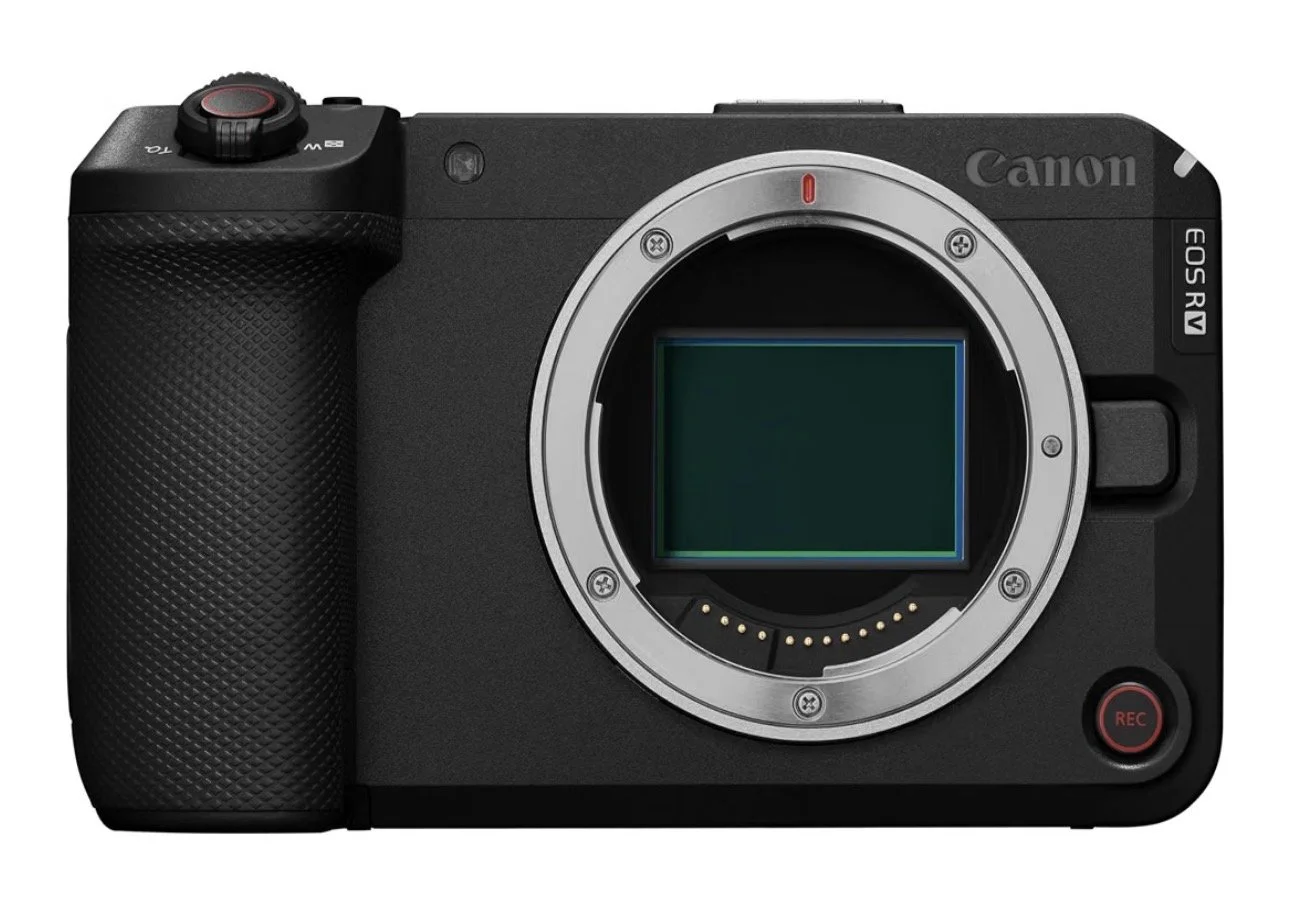
That’s where the Canon EOS R6 V’s built-in cooling fan becomes a practical reason to upgrade. For an R6 owner who films rodeos, horse sales, or live sports, the question is how often heat forces you to stop while the event keeps going.
Why the original Canon R6 gets harder to use as the day goes on
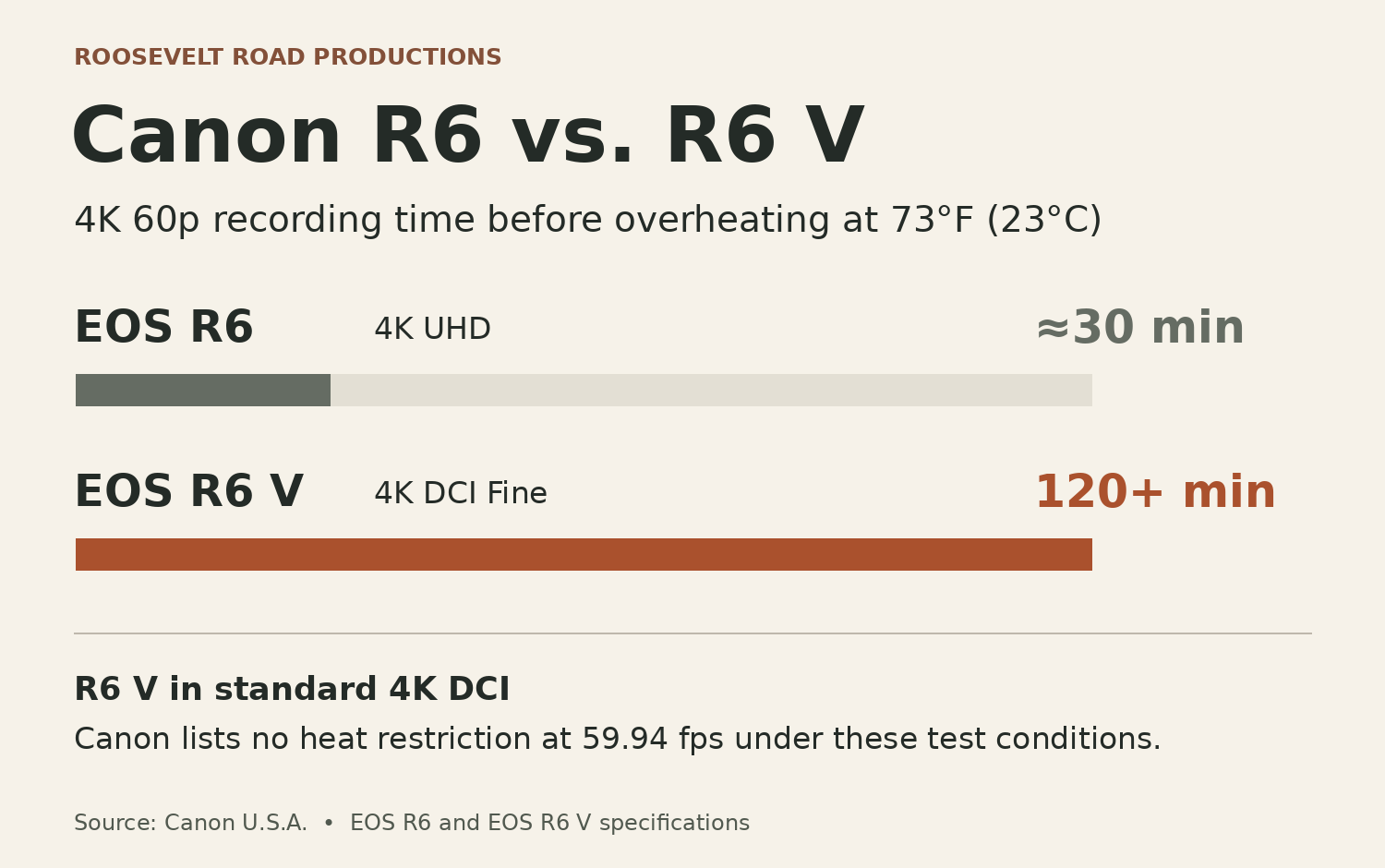
Canon estimates that the original R6 can record approximately 30 minutes of 4K at 60 frames per second from a cold start at 73°F. Its recovery estimate tells you more about covering an event. Once the camera shuts down from heat, turning it off for ten minutes may restore only about five minutes of recording time in that mode. A break between competitors helps, but the camera can begin the next run with considerably less time available than it had for the first.
At Roosevelt Road Productions in Amarillo, that used to be an occasional inconvenience. With the settings used on the company’s two original R6 bodies, about 25 minutes was typical from a cool start. As a shoot went on, the estimate might drop to 15 minutes, then five, sometimes three. When heat management affected three shoots in one week, it became worth looking at what a newer body could do.
The R6 V has an internal cooling fan. In Canon’s testing at 73°F, the camera could record at least 120 minutes in 4K DCI Fine at 59.94 fps before heat shutdown. Actual recording time depends on the mode, temperature, and power available, so two hours in that test doesn’t guarantee two hours at an outdoor arena in July. What makes the figure relevant is the recording mode. A filmmaker can use that kind of 4K footage for an entire event, whether the final edit plays at normal speed or uses slow motion.
What disappears from the edit when you wait to hit record
Consider a cutting horse sale video. A prospective buyer wants to see how the horse reads a cow. If the clip starts halfway through the turn, the buyer can see that the horse is quick. Let the shot run a few seconds earlier and the buyer can also see when the horse picked up the change of direction and how well it held position. Those extra seconds give someone evaluating the horse something to judge.
The same principle applies to a volleyball recruiting film. A diving dig makes a good highlight. Leave in the seconds before contact and a college coach can see where the defender started, how she read the hitter, and how much court she covered. That context is easy to lose when the person behind the camera is trying to conserve recording time.
For an R6 owner weighing an upgrade, a recent timeline is a good place to look. Find the shots that start late or cut off early. If you remember holding off on the record button to let the body cool, you can point to something a different camera would have helped you deliver.
From the arena: Watch Roosevelt Road’s Round 1 highlights from the WRCA World Championship Ranch Rodeo in Amarillo.
How much do 4K 120 fps and 7K matter?
4K at 120 fps earns its keep when motion is the subject. Play 120 fps footage on a 24 fps timeline and you can slow the action to one-fifth speed using frames the camera actually captured. Final Cut Pro can already produce convincing slow motion from lower-frame-rate footage by estimating the frames in between. Give it a fast-moving rope crossing a pipe fence, though, and that becomes a much harder estimation. The R6 V’s uncropped 4K 120p gives a rodeo or sports filmmaker the option to capture that detail on location.
7K Open Gate earns its keep when one shoot has to produce two versions. A seller may need a horizontal horse sale video for a listing and a vertical reel for social media. The R6 V can record the full 3:2 sensor area in 7K at up to 30 fps. Frame with both deliveries in mind and that extra height gives you more room to keep the rider’s hat and the horse’s feet in the vertical edit. That’s a concrete use for 7K even when nobody will watch the finished video at that resolution.
Both features expand what an editor can do with a clip. Cooling answers an earlier question on a live shoot. Will the camera be ready to record the clip in the first place?
Is one R6 V a better investment than two R6 bodies?
The best argument for keeping two cameras is a long interview. Both angles stay framed, a second perspective gives the editor somewhere to cut, and a solo operator can alternate recording between bodies if one gets hot. Someone who regularly delivers multicamera interviews would be giving up a capability they use on paying jobs.
Now take those same cameras to a ranch rodeo. One goes on a tripod and the other on a gimbal. As the team moves down the arena, the operator follows on the gimbal. The tripod keeps recording the spot where the team was. Back in the edit, an hour of second-angle footage might contribute two seconds to the finished film. If the assignment only calls for an occasional wide establishing shot, even a phone on a tripod can fill that role.
There are two numbers worth checking before selling a second body. First, how much footage from that camera made the last few edits? Second, what would it cost to lose a shoot if the primary camera failed? A spare can earn its place without contributing a single frame. Its value depends on the assignments you accept and how readily you could get another camera when you need one.
For Roosevelt Road Productions, roughly 95 percent of the work calls for one actively operated camera. The Canon RF lenses, RØDE microphones, gimbal, lights, and tripod already do their jobs. After heat affected three shoots in a week, the decision was to list both R6 bodies and order one R6 V. How much of the purchase the two sales will cover remains to be seen.
When the upgrade makes sense
Keep the original R6 if it consistently brings home the footage you need. An operator shooting short, planned sequences can get years of value from a paid-off body and good glass. A second R6 also makes sense when interviews, simultaneous angles, or on-site backup are a regular part of the job.
The R6 V makes the stronger case when the pace of the assignment regularly exceeds the camera’s recovery time. For a solo filmmaker covering rodeos, equine performance, or high school and collegiate sports, the return on that investment is easy to recognize. It’s being able to roll when the first roper backs into the box and still have a camera ready for the last one.
Cole Brakebill is the filmmaker behind Roosevelt Road Productions in Amarillo, Texas. He films ranch stories, rodeo events, horse sale videos, and athlete highlights across the Texas Panhandle and eastern New Mexico. Watch Roosevelt Road Productions on YouTube or contact Cole about a shoot.