The $100,000 FlatLander
Every valuable vehicle has a story.
Some are valuable because they are rare.
Some are valuable because they are restored.
Some are valuable because of who owned them.
The FlatLander is valuable because it should not exist.
Its story begins in the oil boom years.
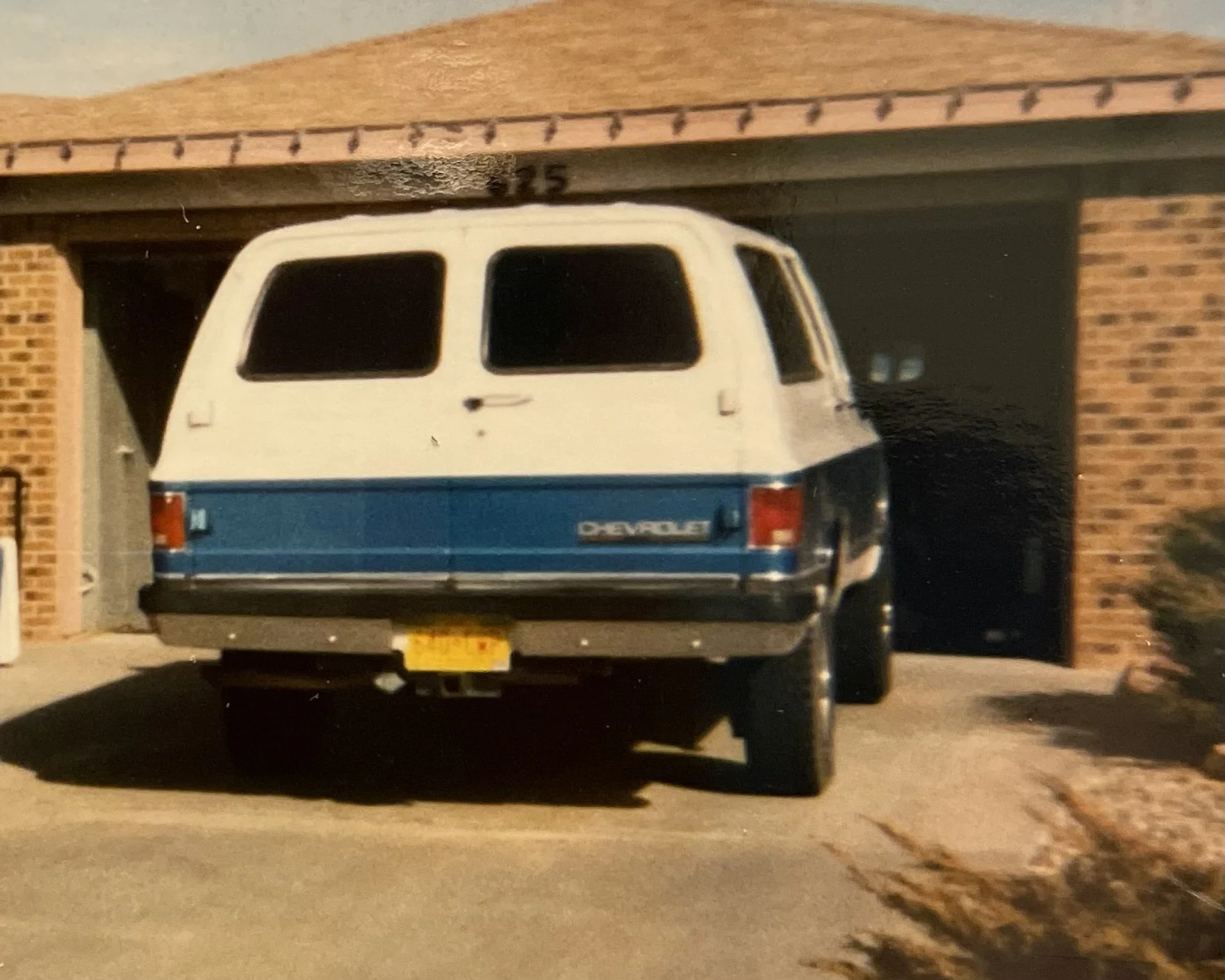
Long before it became a custom truck, it was a plain white 1989 Chevrolet Scottsdale V2500 4x4. Originally part of the Enron fleet, it was acquired by my grandma and her husband while they were living in Belen, New Mexico, where he worked for the company.
For years it served as their vehicle.
Later, my grandma moved back to Portales, New Mexico and continued driving the truck until she decided it was simply more vehicle than she needed. The big four-wheel-drive Chevrolet had served its purpose, and she wanted something smaller and more practical for everyday use.
I remember the truck from my childhood.
Back then it was just a truck.
Nobody could have guessed what it would eventually become.
In 2004, my grandma sold the truck to one of my best friends.
He had a vision unlike anything Chevrolet had ever produced.
His goal was to build a squarebody version of the Avalanche years before factory-inspired custom trucks became common.
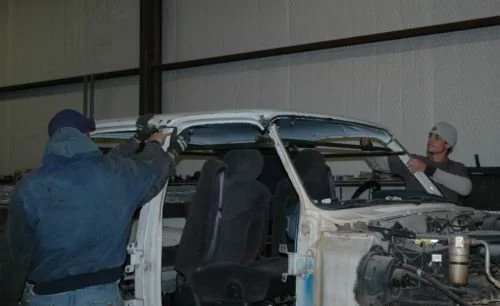
The transformation began with a Sawzall.
The rear of the Suburban was removed and the truck was delivered to a custom fabrication shop in Portales, New Mexico.
What happened next was remarkable.
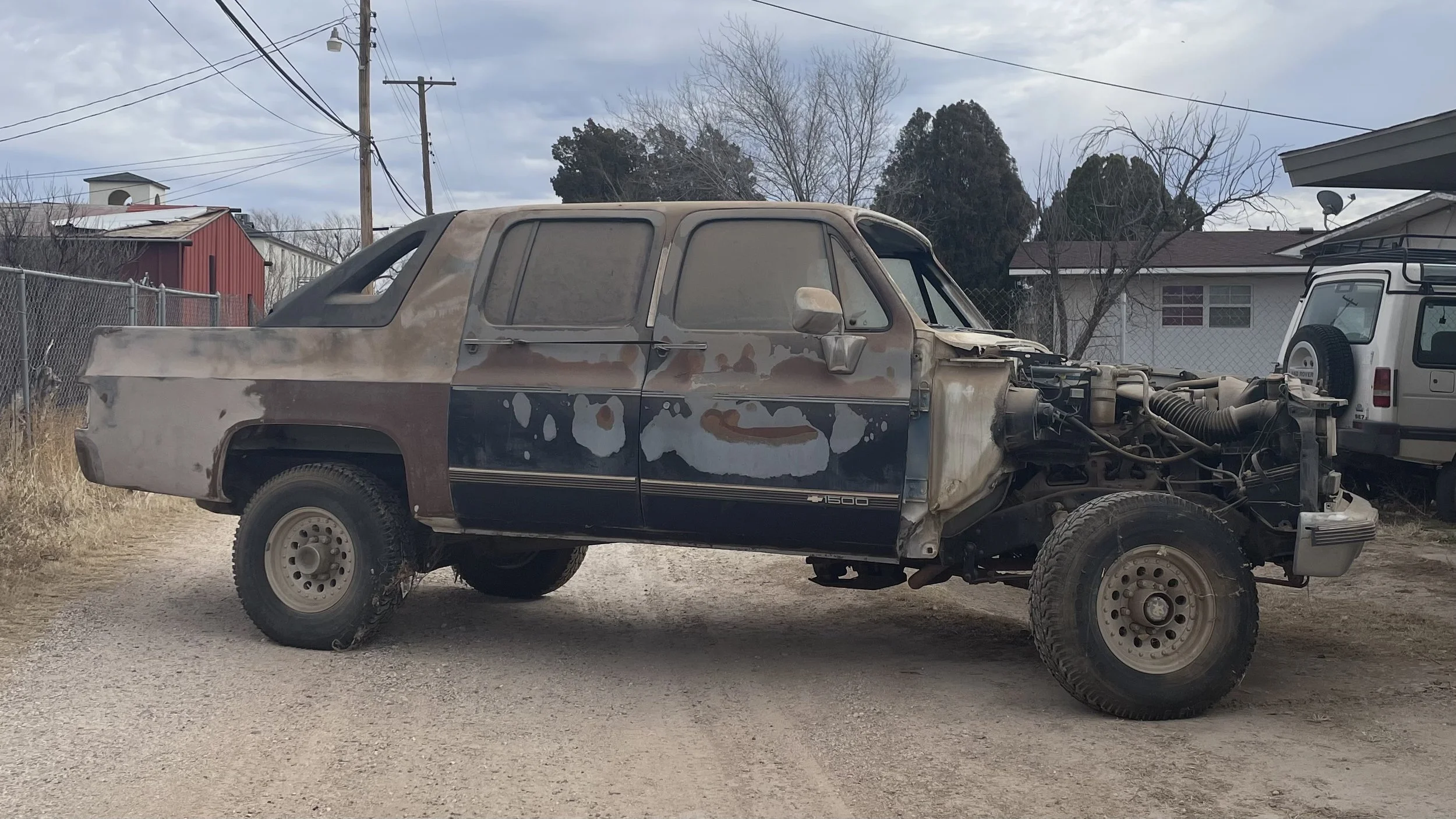
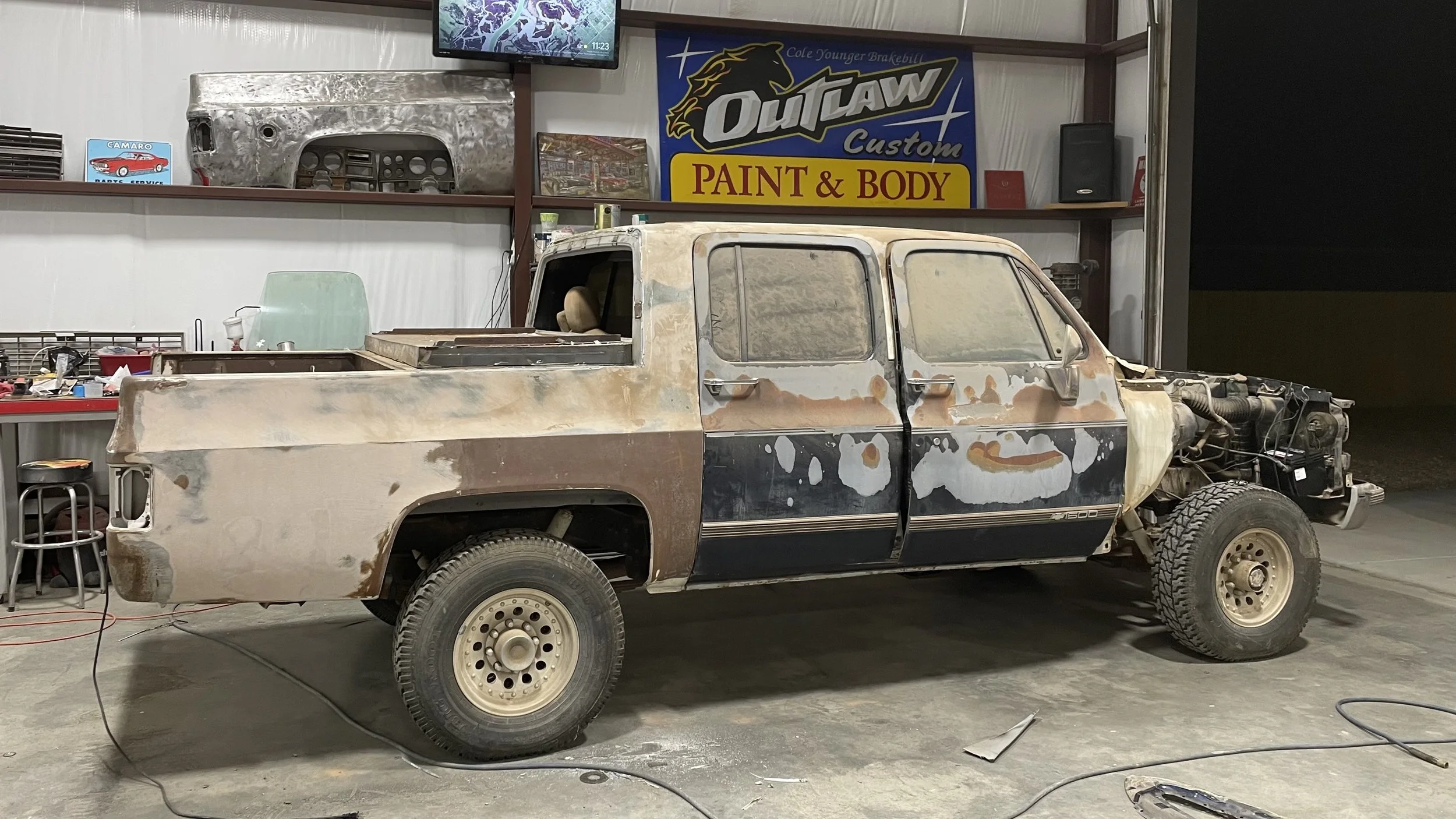
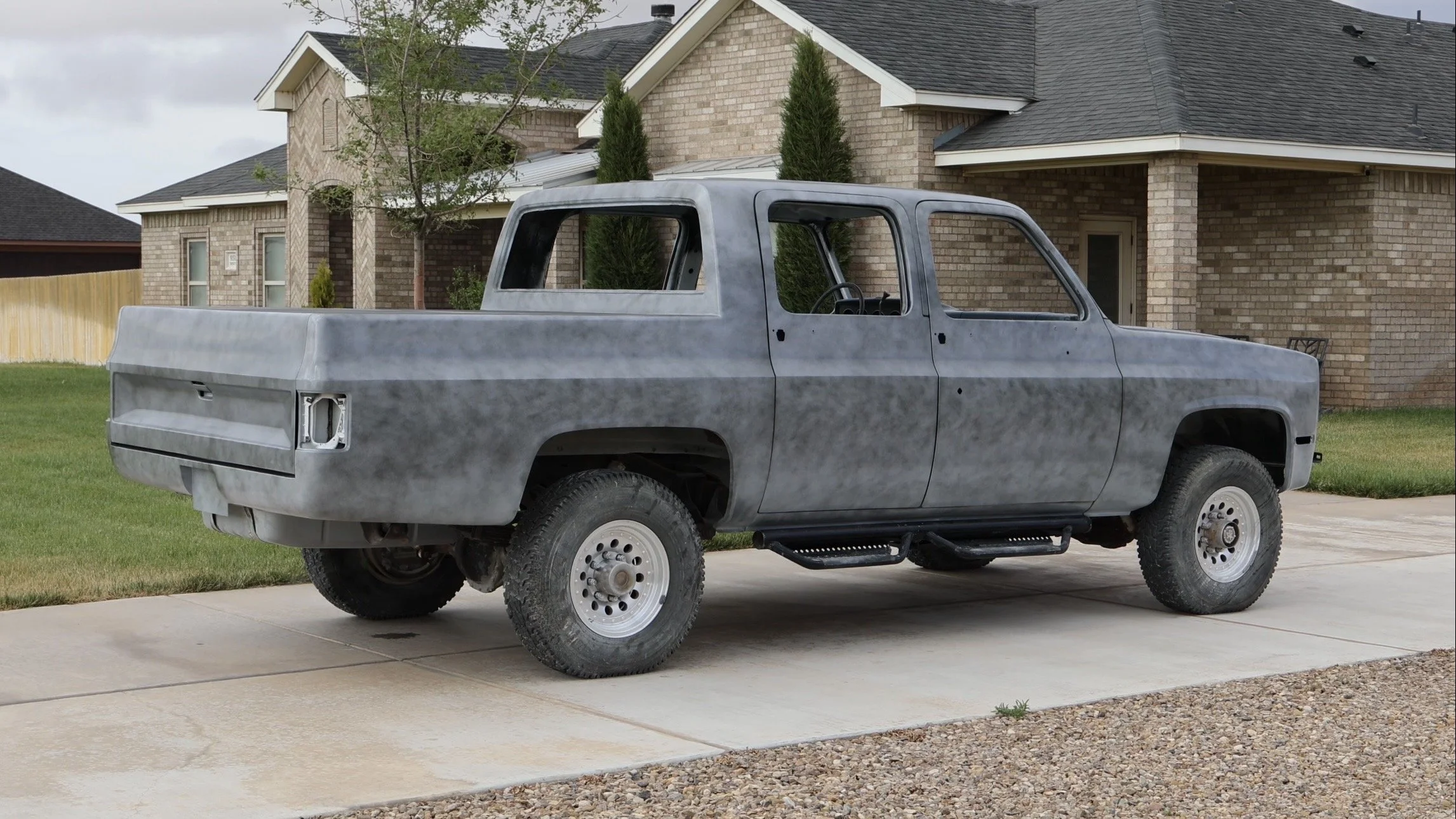
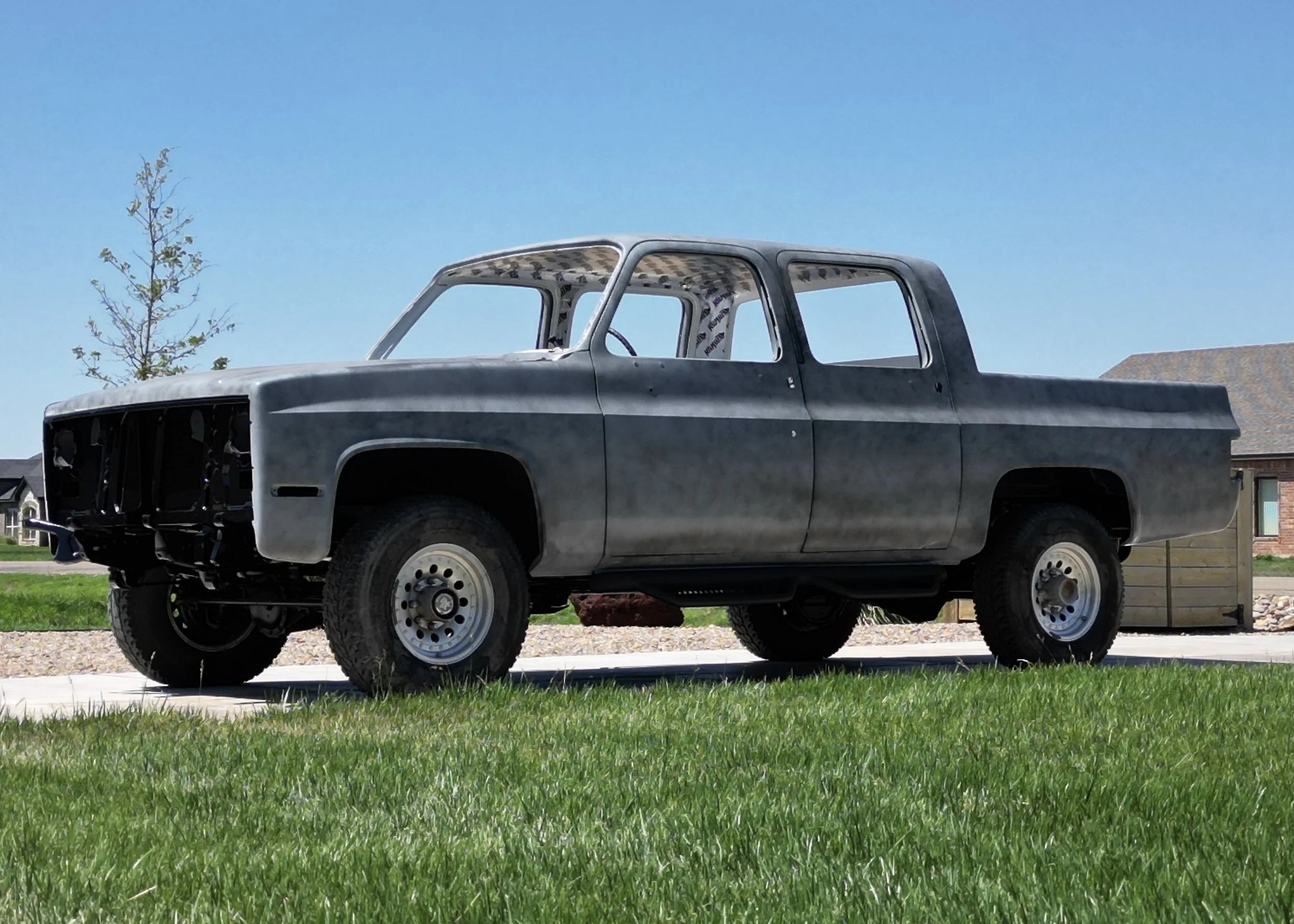
The builders transformed the Suburban into a crew-cab pickup using a pickup rear cab and a crew-cab roof section. The cab was stretched approximately three inches. Pickup bed rails and a tailgate were integrated into the structure. The fuel filler was relocated. Two separate cargo areas were created—one behind the rear seat and another in the pickup bed itself. Avalanche-style sail panels completed the original vision.
The amount of structural work completed was extraordinary.
This was not a cosmetic conversion.
This was a complete reimagining of the vehicle.
Then everything stopped.
The custom shop’s owner became increasingly difficult to contact. Progress slowed to a crawl. Eventually the truck was locked inside the shop with no clear path forward.
The situation became so complicated that assistance from the Roosevelt County Sheriff’s Department was required to recover the vehicle.
The truck was removed.
The project was saved.
But its future remained uncertain.
For eighteen years, the unfinished truck sat beneath carports in eastern New Mexico.
While trends changed, values climbed, and generations of trucks came and went, the project remained frozen in time.
An unfinished idea waiting for someone willing to finish it.
That person eventually became me.
In 2023, I purchased the truck from my friend for $1,776 cash.
Not because it made financial sense.
Because I felt responsible.
This wasn’t just another abandoned project.
This was my grandma’s truck.
I remembered it from my childhood.
I remembered when it was still a Suburban.
I remembered when the idea of transforming it was first discussed.
In a strange way, I had been part of the story from the beginning.
Back in 2003 and 2004, I had started my own custom body shop. My friend spent a lot of time around that world. He watched custom builds take shape. He saw what was possible when someone was willing to cut apart a perfectly good vehicle and create something nobody had ever seen before.
Looking back, I don’t know if The FlatLander would have ever been started had I not introduced him to that way of thinking.
Years later, that realization weighed heavily on me.
I couldn’t shake the feeling that if I didn’t buy the truck, nobody would.
Eventually it would be parted out.
Scrapped.
Forgotten.
The story would end.
I couldn’t let that happen.
I believed I was the only person crazy enough to finish it.
And maybe the only person who understood what it was supposed to become.
The truck was no longer just a project.
It became a responsibility.
By the time it arrived in Amarillo, eighteen years of neglect had taken a tremendous toll.
The structure was still there, but almost everything else had suffered.
The exposed bodywork had deteriorated.
Bare metal surfaces were heavily coated in surface rust.
The interior had become home to multiple generations of cats.
The original tailgate was gone.
The original bed cover was gone.
Parts were missing.
Pieces had been crudely bolted together simply to keep the truck intact.
Most people would have looked at it and walked away.
In fact, most people did.
My friend had attempted to sell it for years with little interest.
The project was simply too overwhelming.
Too incomplete.
Too unusual.
Too far gone.
For six months I pushed forward.
I cleaned.
Disassembled.
Cataloged parts.
Built a new bed cover.
Installed a new tailgate, hood, and fender.
Studied the work that had already been completed.
Slowly, The FlatLander began revealing itself.
And what I discovered surprised me.
Beneath the neglect was real craftsmanship.
The proportions worked.
The structure was sound.
The concept was ambitious.
The truck had problems, but the foundation was far better than anyone would have expected.
Of course, the closer I looked, the more unfinished details appeared.
Years of fabrication and welding had caused the cab structure to shrink slightly.
The rear doors contacted the quarter panels.
The upper portions of the doors touched the roof in places.
The tailgate opening was too narrow to accept a replacement factory tailgate.
Crude steel straps remained welded into the rear cab structure to support the Avalanche sail panels.
Behind the cab sat a large box-like protrusion built solely to support those panels.
Functional, perhaps.
Elegant, certainly not.
Then there was the fuel system.
Eighteen years of stale gasoline had destroyed nearly everything.
The tank.
The pump.
The sending unit.
The filters.
With the help of my father-in-law, an exceptional mechanic, the fuel system was rebuilt and the truck was running again by early 2023.
After everything it had endured, the result was surprising.
The engine ran well.
Really well.
For a vehicle that had spent nearly two decades sitting dormant, it showed remarkably few signs of mechanical deterioration.
That discovery changed my understanding of the truck.
On the surface, it looked like a disaster.
Underneath, it had been preserved.
The drivetrain remained largely untouched.
The suspension was in remarkable condition.
The mileage was still relatively low.
Built in 1989.
Driven for roughly fifteen years.
Then left unfinished for nearly two decades.
For years I had viewed The FlatLander as an abandoned custom project.
Suddenly, I began to see it differently.
It was a barn find.
Not the romantic version hidden in an old wooden structure.
The opposite.
A forgotten prototype weathering beneath carports in eastern New Mexico.
A vehicle that had spent more years waiting than it had actually been driven.
Against all odds, it had survived.
And for the first time, it felt like it wanted to live again.
The first night I brought the truck home, the Avalanche fairings came off.
I didn’t hesitate.
I didn’t save them.
I didn’t second-guess the decision.
They were gone.
The truck immediately looked cleaner.
Simpler.
More honest.
For the first time, I could see what was hiding underneath twenty years of assumptions.
At the time, I was still thinking like a custom builder.
The plans included more aggressive styling, more custom touches, and more visual impact.
Then life happened.
Filmmaking.
Documentary work.
Business ventures.
Music.
The FlatLander waited.
Not abandoned.
Not forgotten.
Just waiting.
When I returned to the project in the spring of 2026, something had changed.
Not the truck.
Me.
By then, twenty-two years had passed since the first cut was made.
And for the first time, I stopped asking how to finish the truck.
I started asking what Chevrolet would have done.
That single question changed everything.
The goal was no longer to build the coolest version of The FlatLander.
The goal was to build the most believable version.
Every modification became more restrained.
Every design choice became more intentional.
Every decision had to answer the same question:
Would Chevrolet have done it this way in 1989?
If the answer was no, it didn’t belong on the truck.
That philosophy became the foundation of everything that followed.
Before The FlatLander could move forward, something else had to go.
When I purchased the truck in 2023, I was already deep into another project.
A 1977 K5 Blazer.
Like most project vehicles, it had started with good intentions and quickly snowballed.
The rust repair was already underway.
But the real problem wasn’t the sheet metal.
It was everything I had accumulated around it.
Over the years I had gotten far ahead of myself.
A dressed 350 crate engine.
A 700R4 transmission.
Rock Crusher wheels.
Carpet.
Weatherstrip kits.
Seats.
And even an entire 1983 K5 Blazer purchased strictly as a donor vehicle.
At some point I realized a hard truth.
I couldn’t do both projects.
Not correctly.
Not at the same time.
The K5 market was exploding in value, and there were plenty of reasons to keep going. But every dollar, every square foot of shop space, and every ounce of creative energy spent on the Blazer was energy that wasn’t being spent on The FlatLander.
So I made a decision.
The Blazer had to go.
Instead of selling everything as a package, I dismantled the project piece by piece.
Parts that had been sitting on shelves for years suddenly became valuable.
The market had moved.
Many of the components were worth considerably more than what I had originally paid for them.
By the time everything was sold, I had recovered roughly $12,000.
More importantly, I had reclaimed my shop.
For the first time, The FlatLander had my full attention.
It also had a new problem.
Even though it had spent the previous three years indoors, surface rust had begun reclaiming exposed metal throughout the truck.
Nothing catastrophic.
But enough to remind me that unfinished projects move backward when they aren’t moving forward.
On April 4, 2026, the build officially began again.
The truck was stripped back down.
The rust was removed.
Panels were adjusted.
Gaps were refined.
Bodywork was roughed in.
The focus wasn’t perfection.
The focus was stabilization.
I needed to stop the truck from deteriorating any further.
Once the body was where I wanted it, I sprayed epoxy primer.
For the first time since 2004, The FlatLander was a single color again.
That moment was bigger than I expected.
For more than two decades, the truck had existed as a patchwork of bare steel, body filler, mismatched panels, and unfinished ideas.
The epoxy unified everything.
For the first time, I could step back and see the shape that had been hiding underneath the chaos.
And what I saw surprised me.
The proportions were excellent.
The stance looked natural.
The lines flowed.
It looked remarkably believable.
Not like a custom truck.
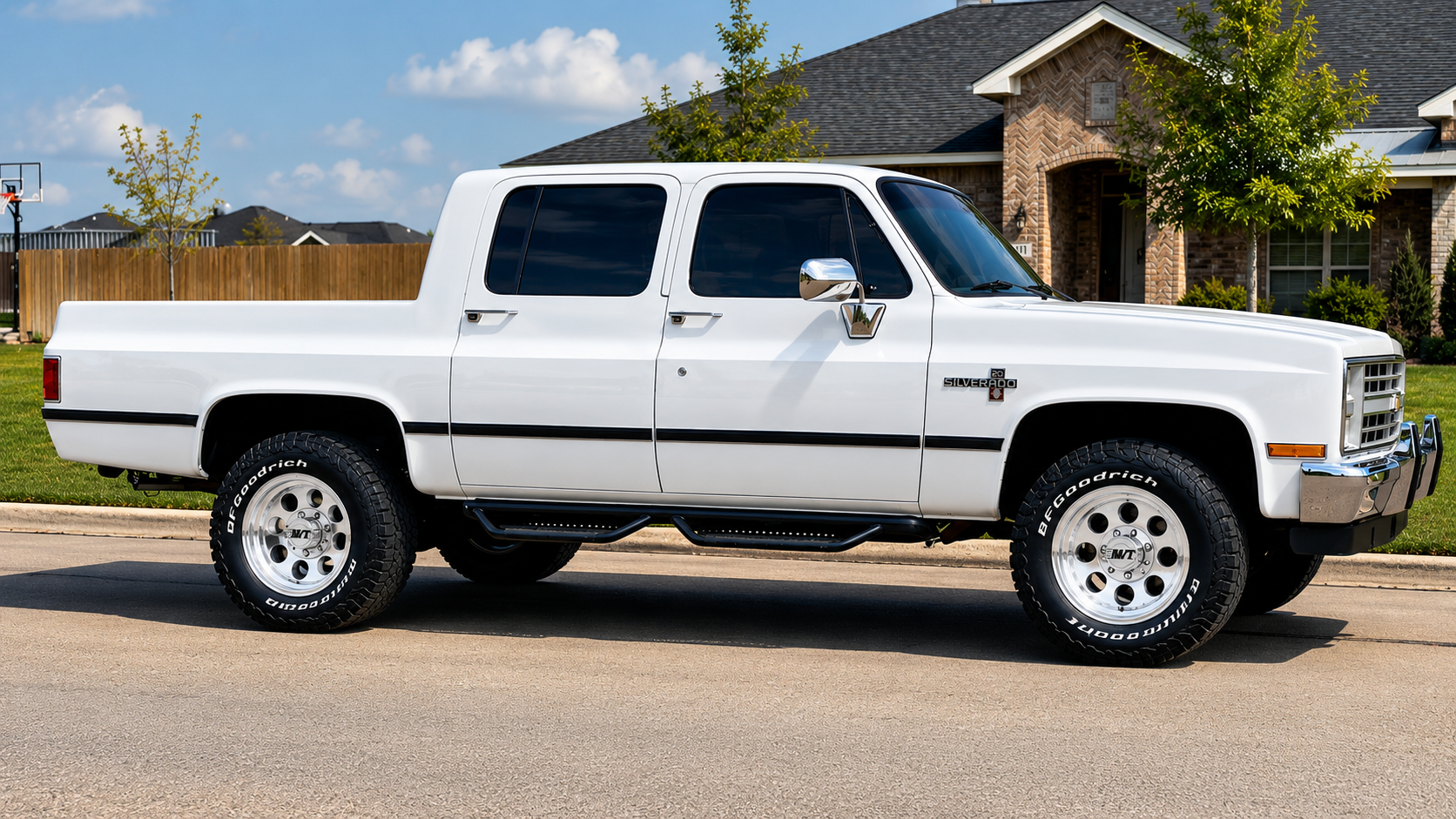
Like something Chevrolet might have actually built in 1989.
That was the moment the prototype vision truly took hold.
With the exterior stabilized, my attention shifted to the interior.
Compared to the fresh primer outside, it looked rough.
The floor was structurally excellent with virtually no rust, but years of modifications had left their mark.
Unused holes.
Scratches.
Burn marks.
Discoloration.
Old seat mounts that no longer served a purpose.
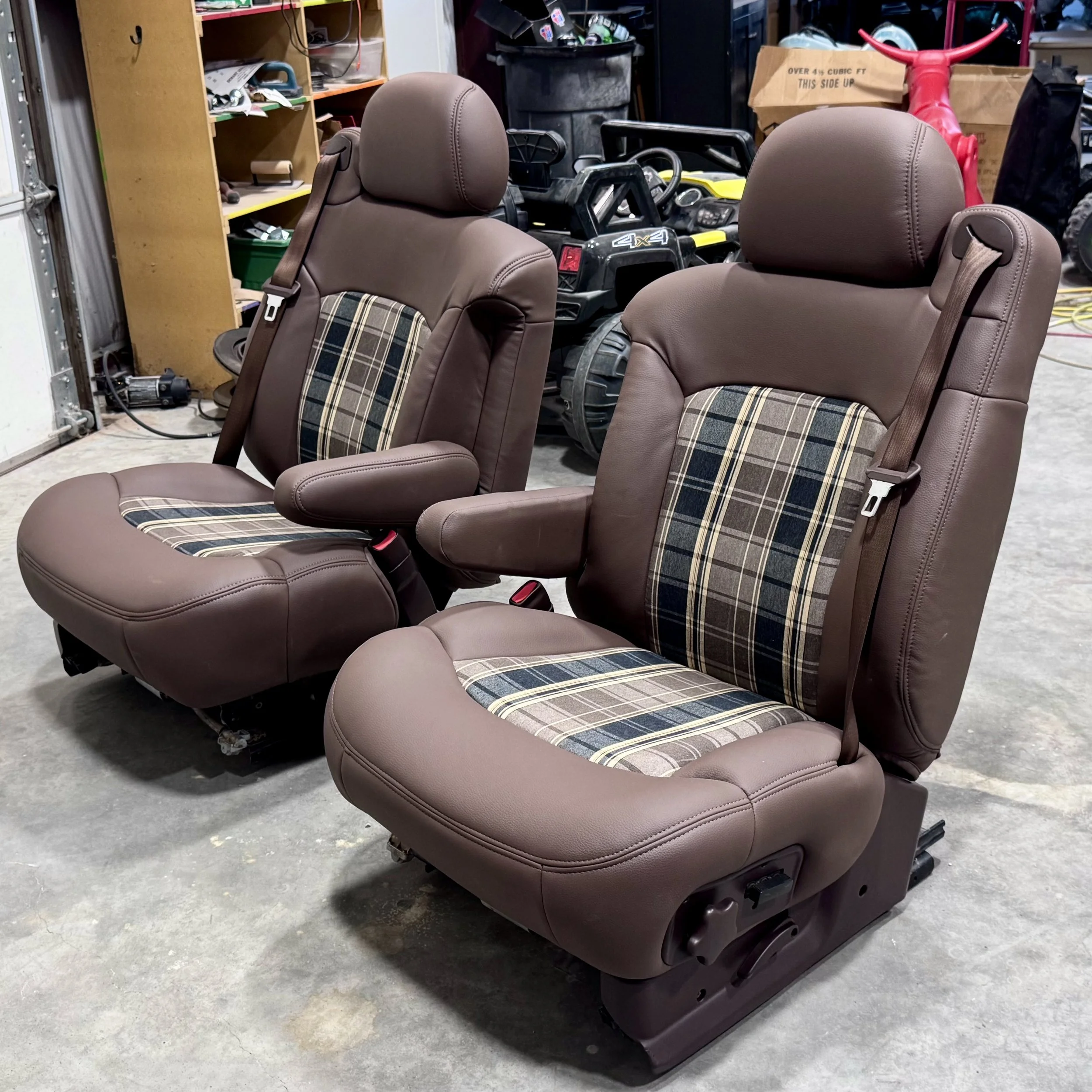
The new 1999-2006 Silverado seats incorporated the seatbelts into the seats themselves, eliminating the need for many of the original mounting points.
The interior needed a reset.
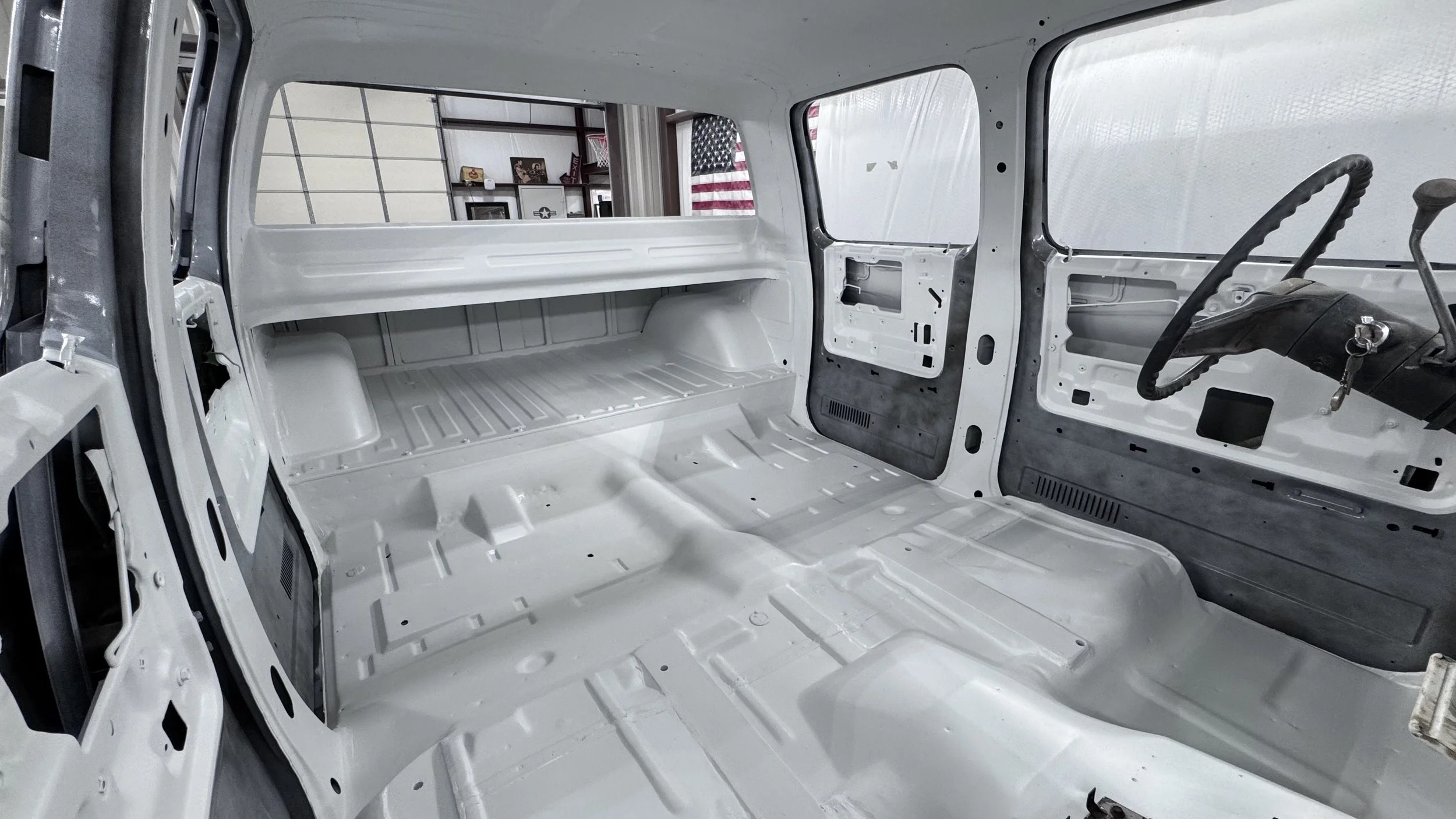
I chose matte white.
Not because it was flashy.
Because it was clean.
Simple.
Factory.
Everything was stripped, sanded, repaired, and refinished.
The cab.
The floor.
The rear interior cargo compartment.
Every visible surface.
Once again, the transformation was immediate.
The truck felt newer.
Cleaner.
More intentional.
And despite everything it had endured over the previous twenty-two years, the underlying structure continued to impress me.
The bones were exceptional.
The FlatLander wasn’t fighting me.
It was finally beginning to cooperate.
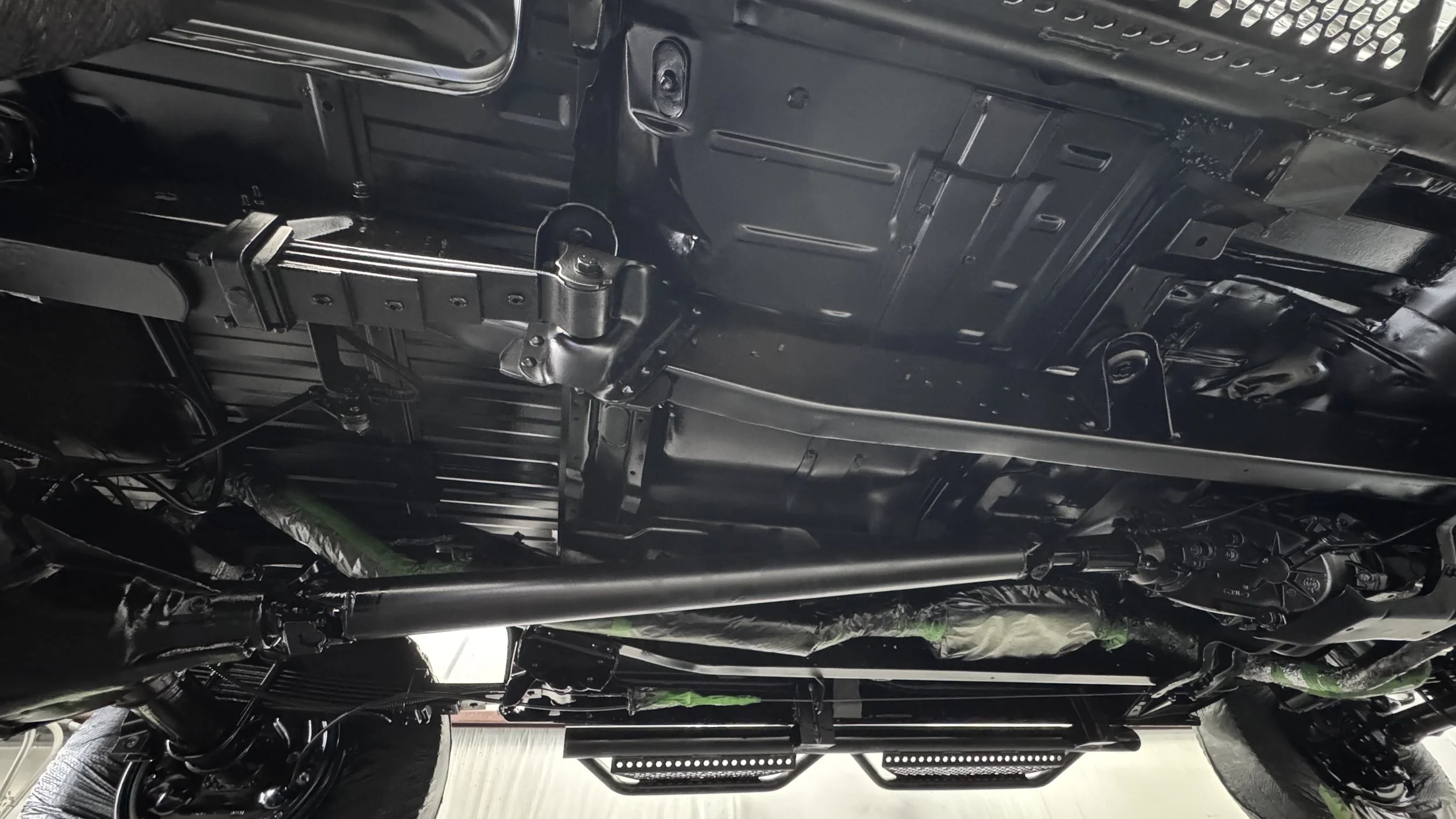
The underside was next.
For years it had been hidden from view, carrying the scars of the original transformation.
Welds.
Modifications.
Surface corrosion.
Evidence of twenty-two years spent becoming something Chevrolet never built.
Most people would never see that part of the truck.
That didn’t matter.
I would know it was there.
If The FlatLander was going to be restored as a believable factory prototype, the work underneath had to match the work on top.
The process was tedious.
Every surface had to be cleaned.
Degreased.
Sanded.
Prepared.
Protected.
What looked like a simple refinishing project quickly became hundreds of small decisions.
The frame.
The floor pans.
The wheel wells.
The fuel tank skid plate.
The suspension components.
The radiator support.
One piece at a time, the underside began to look new again.
Not over-restored.
Not flashy.
Just clean.
Intentional.
Finished.
Even the custom side steps received the same treatment.
Those steps had been added during my original push in 2023. They began life as three-step running boards from a newer Dodge truck before being cut down, reworked, and welded permanently to the body.
Like so many pieces of The FlatLander, they weren’t designed for this truck.
They were adapted to become part of it.
By this point, that had become a recurring theme.
Almost every component on the truck had a story.
Almost every component required modification.
Nothing simply bolted into place.
Everything demanded thought.
Everything demanded compromise.
Everything demanded time.
The wheels came off.
The brakes were refreshed.
Hidden areas were cleaned and refinished.
Small details that most people would never notice received the same attention as the highly visible portions of the build.
Because by then, I had stopped building the truck for other people.
I was building it for the story.
For the illusion.
For the possibility that one day someone might crawl underneath The FlatLander at a car show and walk away wondering if Chevrolet had secretly built a prototype they had somehow never seen before.
That was always the goal.
Not to impress people with custom work.
To make them question their own memory.
By the time the underside was complete, the truck felt different.
More complete.
The kind of completeness that comes from knowing the parts nobody sees received the same attention as the parts everybody does.
For the first time in its twenty-two-year journey, The FlatLander was beginning to feel like a real vehicle instead of a project.
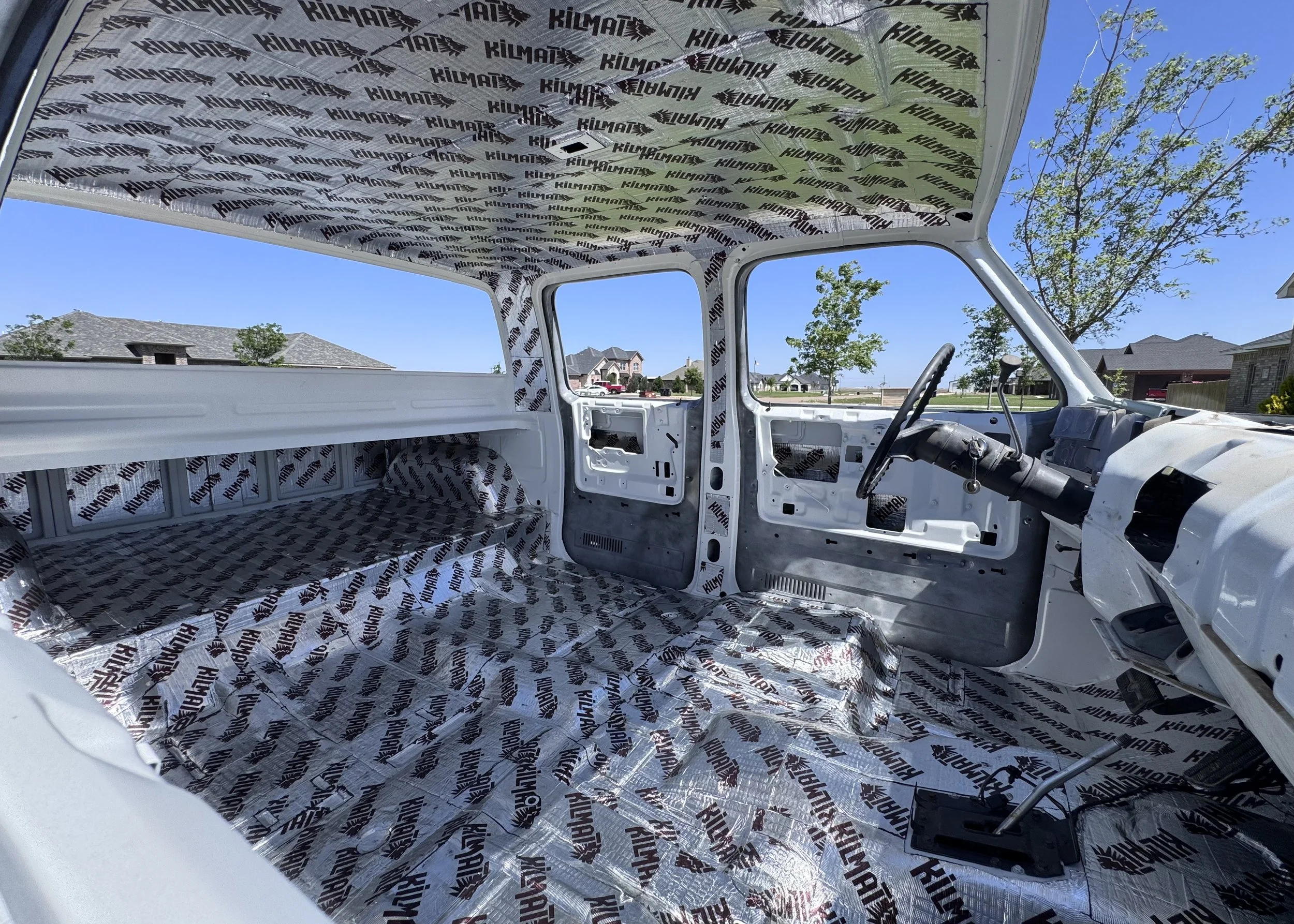
Then came the sound deadening.
In some ways, it felt wrong.
I had just spent hours restoring the interior metal.
The floor.
The roof.
The pillars.
The rear storage compartment.
All of it had been stripped, sanded, repaired, and finished in clean matte white.
Then I covered most of it with Kilmat.
But that was the point.
I knew what was underneath.
I knew the metal had been protected.
I knew the cab had been restored before anything was hidden.
The sound deadening wasn’t there to cover up neglect.
It was there to complete the truck.
Every major surface received attention.
The floor.
Most of the interior roof.
The pillars.
The rear interior storage area.
Even the inside of the exterior door skins.
Piece by piece, the cab became quieter.
Heavier.
More solid.
More finished.
It was another layer most people would never see.
Another detail buried beneath the final truck.
But those hidden layers matter.
They are the difference between a vehicle that looks finished and a vehicle that feels finished.
The FlatLander was no longer just being assembled.
It was being refined.
With the interior quieted and protected, my attention turned to the bed.
It was one of the last places on the truck still visibly trapped in the fabrication phase of 2004.
Bare modifications.
Exposed work.
Evidence of a project that had never truly moved beyond its construction stage.
It was time for that to change.
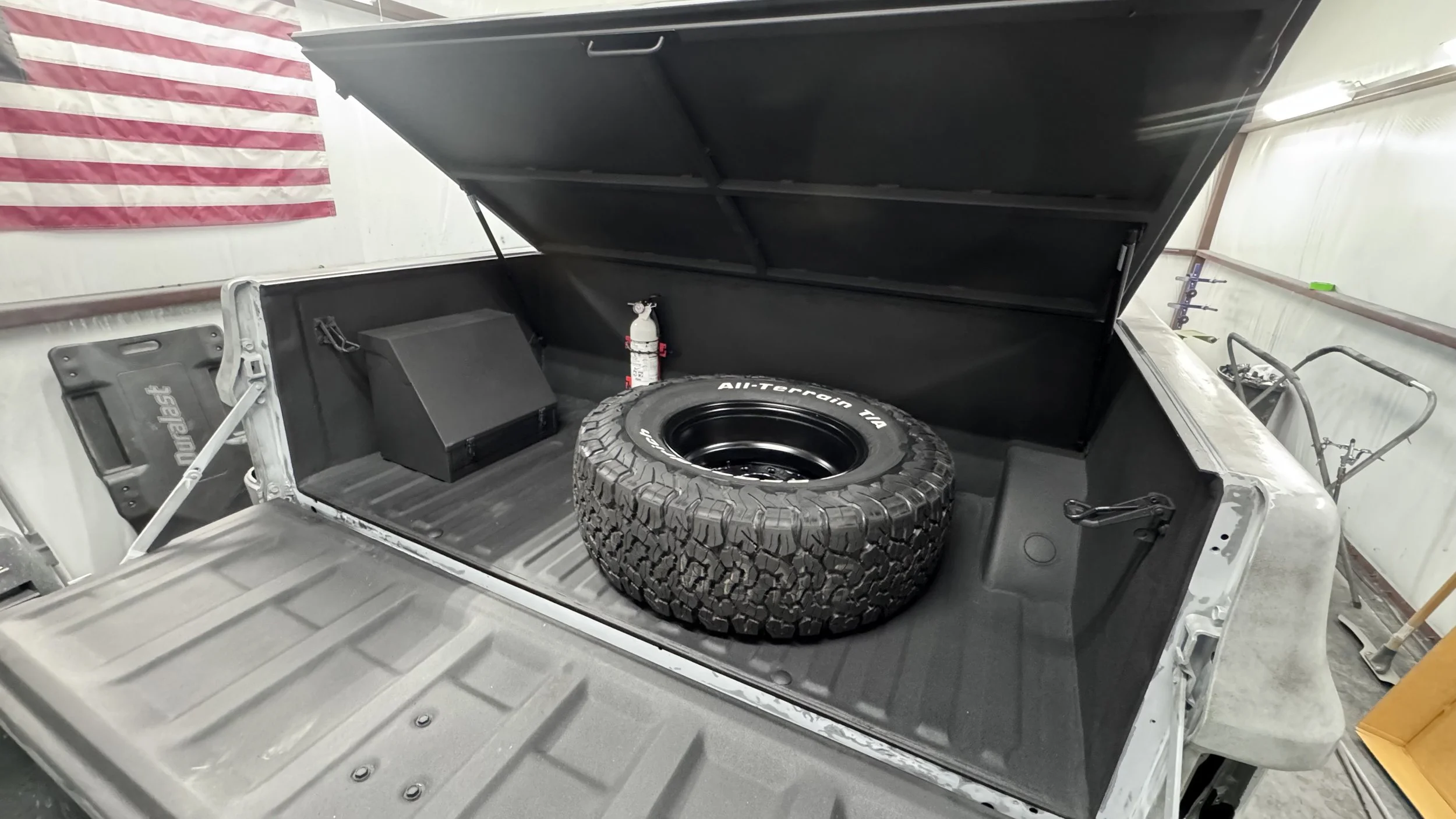
The bed floor, interior tailgate, and underside of the bed cover were refinished with durability in mind.
The goal wasn’t luxury.
The goal was usefulness.
The bed cover received a redesign as well.
The gas struts I had originally installed during my 2023 push proved to be too aggressive. The cover opened higher than necessary and placed too much stress on the piano hinge supporting it.
Shorter, lighter struts replaced them.
The movement became smoother.
The opening angle became more natural.
The entire system felt more refined.
More intentional.
Then it was time to decide what belonged in the bed.
Despite the amount of work going into The FlatLander, I never intended for it to become a trailer queen.
The FlatLander was being built to drive.
To travel.
To work.
To live the life trucks are supposed to live.
That meant practical decisions.
The first was a spare tire.
I found a 2003 eight-lug Chevrolet wheel on Facebook Marketplace wearing a nearly new BFGoodrich All-Terrain tire.
The wheel was refinished.
The tire was cleaned and detailed.
Then the assembly was mounted permanently to the bed floor.
Not because it looked cool.
Because a truck should have a spare tire.
Especially a thirty-seven-year-old truck that I fully intend to drive.
The next addition was a fire extinguisher.
White, to match the theme of the truck.
Practicality disguised as styling.
We’ve all seen the videos.
A fuel leak.
An electrical short.
A project vehicle engulfed in flames while everyone stands helplessly nearby.
Not The FlatLander.
Not if I can help it.
If something ever goes wrong, I’ll be prepared.
A Montezuma toolbox found its place along the left side of the bed floor as well.
I had acquired it years earlier and finally found the perfect home for it.
Inside will live a complete tool kit.
Because experience has taught me something important about old vehicles.
No matter how carefully you build them, they will occasionally surprise you.
Sometimes those surprises happen close to home.
Sometimes they happen hundreds of miles away.
Either way, I intend to be ready.
By now, a pattern had emerged throughout the build.
Every major decision balanced appearance with practicality.
The FlatLander needed to be beautiful.
But it also needed to be useful.
The truck wasn’t being restored to spend its life parked.
It was being restored to spend its life moving.
The FlatLander may occasionally find itself at a car show.
But first and foremost, it is a truck.
And trucks are meant to be driven.
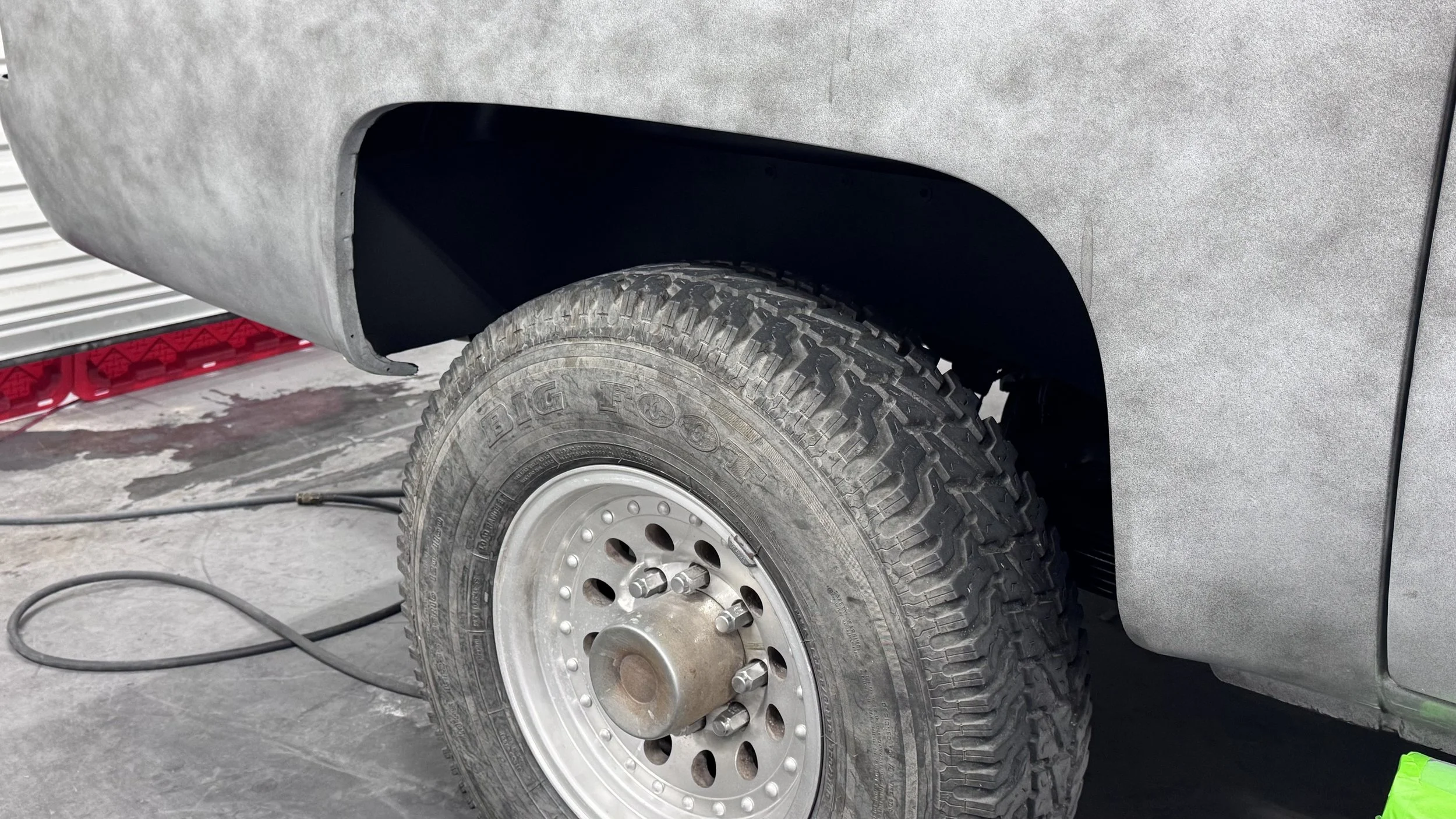
The rear wheel wells created the next problem.
From certain angles, the truck still had a visible emptiness in the rear wheel openings.
The original factory fillers were missing, and the open space left behind created a gaping void through the rear section of the truck.
At first, I tried to solve it the obvious way.
Find the missing factory pieces.
That turned out to be harder than expected.
The parts were no longer readily available, and even if I found salvage pieces from another Suburban, they would only solve part of the problem. The factory fillers did not completely close off the rear wheel opening.
The FlatLander deserved better.
The underside had already been cleaned, refinished, and protected, but I still did not want the rear suspension, structure, and empty space visible through the wheel openings.
The truck needed something more finished.
Something more modern.
Something that looked intentional.
For weeks, I thought through possible solutions.
Metal.
Plastic.
Factory parts.
Modified salvage pieces.
Nothing felt right.
Eventually, the answer came from an unlikely material.
Reinforced neoprene.
A flexible, durable, 1/8-inch sheet material that could be shaped to the opening, supported properly, and finished to match the rest of the truck.
I started with cardboard templates.
Then came the cutting.
Fitting.
Adjusting.
Trimming.
Re-fitting.
Each side had to follow the shape of the body, the wheel opening, and the obstacles behind it.
Nothing about it was universal.
Nothing came from a catalog.
Once the panels were shaped, the real work became supporting them.
The liners needed to look clean, but they also needed to survive highway speeds.
That meant brackets.
Stiffeners.
Reinforcement.
In the end, ten custom handmade brackets and supports were fabricated to hold the neoprene fillers in place.
The panels were then coated in fine-texture black Raptor liner to match the rest of the wheel wells and bed areas.
The result exceeded the problem.
What began as a missing factory filler became a better-than-factory solution.
The rear wheel openings were no longer empty.
The underside was no longer exposed.
The truck looked more complete.
More modern.
More finished.
The FlatLander had gained another detail Chevrolet never built, but probably would have needed if the truck had ever entered production.
At the same time, the suspension received its own level of thought.
With most of the underside finished in black, nearly everything beneath the truck disappeared visually.
Semi-gloss black.
Flat black.
Fine-texture black.
Clean.
Simple.
Purposeful.
The exception would be the shocks.
Bilstein 4600s.
Blue and yellow.
Not because I wanted bright colors underneath the truck.
Because I wanted the truck to ride as well as possible.
At the end of the day, The FlatLander is still a thirty-seven-year-old three-quarter-ton Chevrolet.
It will never ride like a modern luxury vehicle.
But that did not mean the ride quality should be ignored.
Bilstein was the obvious choice.
Quality shocks.
Proven engineering.
A better chance at making an old heavy truck feel controlled, stable, and pleasant to drive.
A matching Bilstein steering stabilizer would be installed up front as well.
The blue and yellow accents may stand out beneath the otherwise black underside, but that is fine.
They will not be decoration.
They will be evidence.
Evidence that every part of the truck was considered.
Not just the parts people see.
Not just the parts that photograph well.
Every part.
Even the pieces hiding behind the wheels.
Even the parts doing their work under the truck at highway speed.
There is one more part of this story that deserves recognition.
The FlatLander did not begin in my shop.
The hardest part of the transformation had already happened long before I ever owned the truck.
Back in 2004, someone looked at an ordinary Suburban and imagined something that did not exist.
Then he picked up a Sawzall and made the first cut.
The structural transformation.
The crew-cab conversion.
The integration of the pickup bed.
The roof modifications.
The countless fabrication challenges required to make the idea physically possible.
Much of that work had already been completed before the project was abandoned.
The original builder possessed a level of vision and determination that should not be overlooked.
He saw something nobody else saw.
And he was willing to attempt something most people would never consider.
Years later, he passed away.
He never got the opportunity to see the truck completed.
He never got to see what the idea eventually became.
That reality has stayed with me throughout this project.
Because while I may be the person finishing The FlatLander, I am not the person who started it.
In many ways, I view myself as a caretaker of someone else’s vision.
A steward of a project that survived long enough to deserve a second chance.
My role was never to erase what had been built.
My role was to understand it.
To correct what time had damaged.
To solve the problems that remained.
To refine the details.
And ultimately to guide the truck toward the destination it had been searching for since 2004.
Every modification I make is built upon a foundation someone else created.
Every improvement exists because another builder was willing to take the risk of creating something entirely unique more than two decades ago.
The FlatLander belongs to all of its chapters.
The Chevrolet engineers who designed the original Suburban in 1989.
The fabricator who transformed it in 2004.
And the person stubborn enough to rescue it, preserve it, and finally finish it twenty-two years later.
That is what makes this truck special.
It is not the work of one man.
It is the continuation of an idea that refused to die.
So why call it The $100,000 FlatLander?
Because this story was never really about money.
The title is simply a question.
What is something worth when there is only one of it?
Over the last decade, squarebody Chevrolets have transformed from old work trucks into legitimate collector vehicles. Trucks that were once overlooked are now being restored, preserved, and celebrated. Values have climbed. Enthusiasm has grown. An entire generation has rediscovered what made these trucks special in the first place.
But The FlatLander occupies a category all its own.
It is not simply a restored squarebody.
It is not simply a custom truck.
It is not a survivor.
It is not a replica.
It is not a tribute.
It is a one-of-one vehicle with a documented history stretching across nearly four decades.
An Enron fleet truck.
My grandma’s daily driver.
A radical custom concept born in 2004.
An abandoned project rescued from obscurity.
A prototype Chevrolet never built.
A truck that spent eighteen years waiting for someone willing to finish what had been started.
There are easier ways to build a valuable vehicle.
You can buy rare options.
You can write large checks.
You can start with something already desirable.
That was never this project.
The FlatLander was built from responsibility.
From curiosity.
From stubbornness.
From the belief that some stories deserve to survive.
At every stage there was a reason to quit.
The project was too unusual.
Too incomplete.
Too far gone.
Too expensive.
Too time-consuming.
Yet somehow it survived.
Not because it was practical.
Because it mattered.
No single person can claim full ownership of this story.
That is what makes The FlatLander different.
Its value is not found in any single component.
Not in the paint.
Not in the fabrication.
Not in the parts.
Not even in the thousands of hours invested into bringing it back to life.
Its value comes from the fact that it cannot be duplicated.
Someone could build a nicer truck.
Someone could build a more expensive truck.
Someone could build a cleaner truck.
But nobody can recreate this story.
Nobody can recreate the grandmother who owned it.
The friend who dreamed it up.
The builder who transformed it.
The abandonment.
The rescue.
The eighteen years spent waiting beneath New Mexico carports.
The decision to save it when everyone else had moved on.
The FlatLander belongs to all of those chapters.
And that is why the title matters.
Whether the market ever agrees with that number is almost beside the point.
The point is that this truck deserves to be treated like something valuable.
Because it is.
Not because of what it cost.
Not because of what it might someday sell for.
Because of what it represents.
A vision that survived.
A project that refused to die.
A story that almost disappeared.
And a truck that should not exist.
Yet somehow does.
And that is why I call it The $100,000 FlatLander.