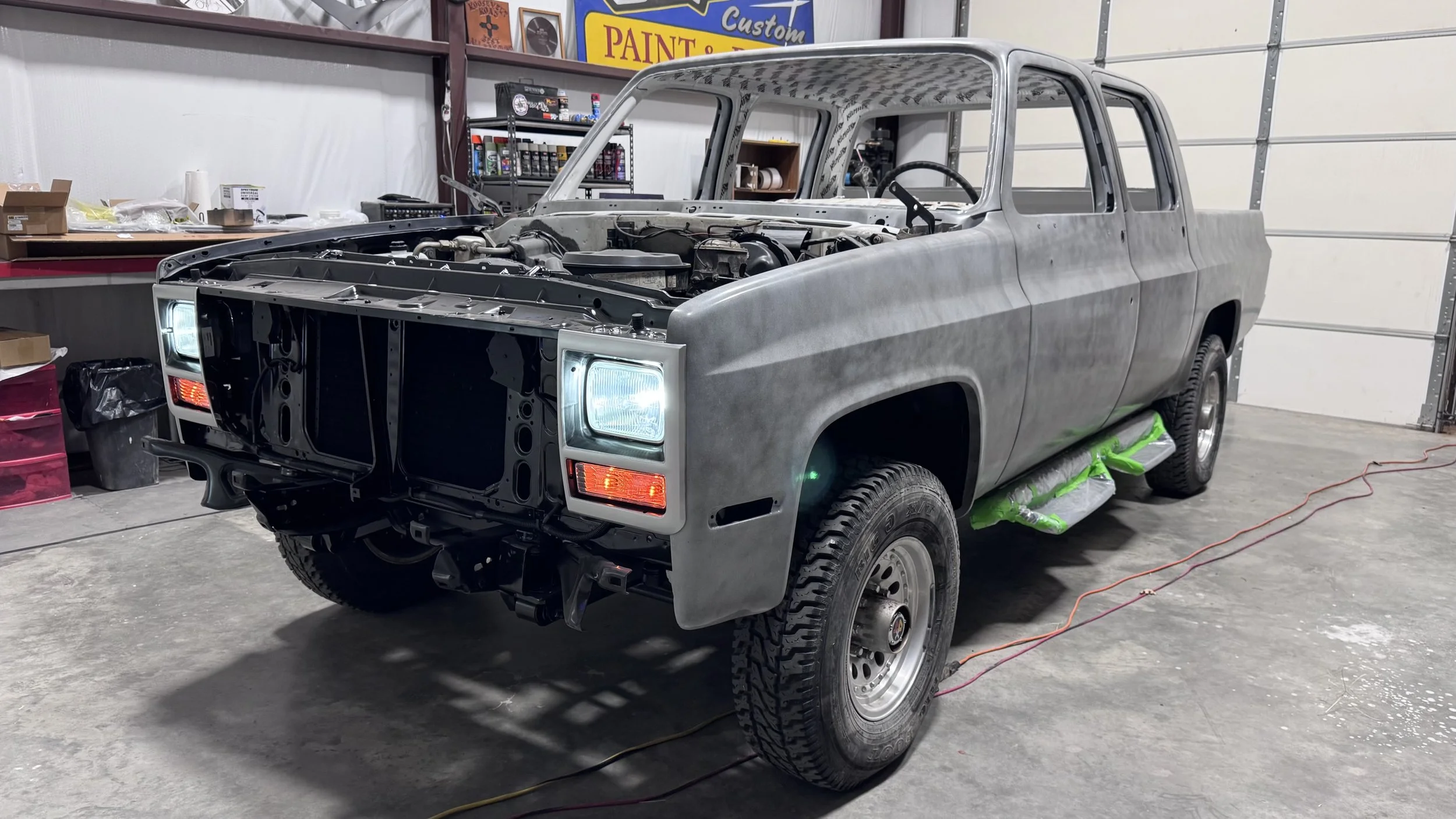
THE FLATLANDER
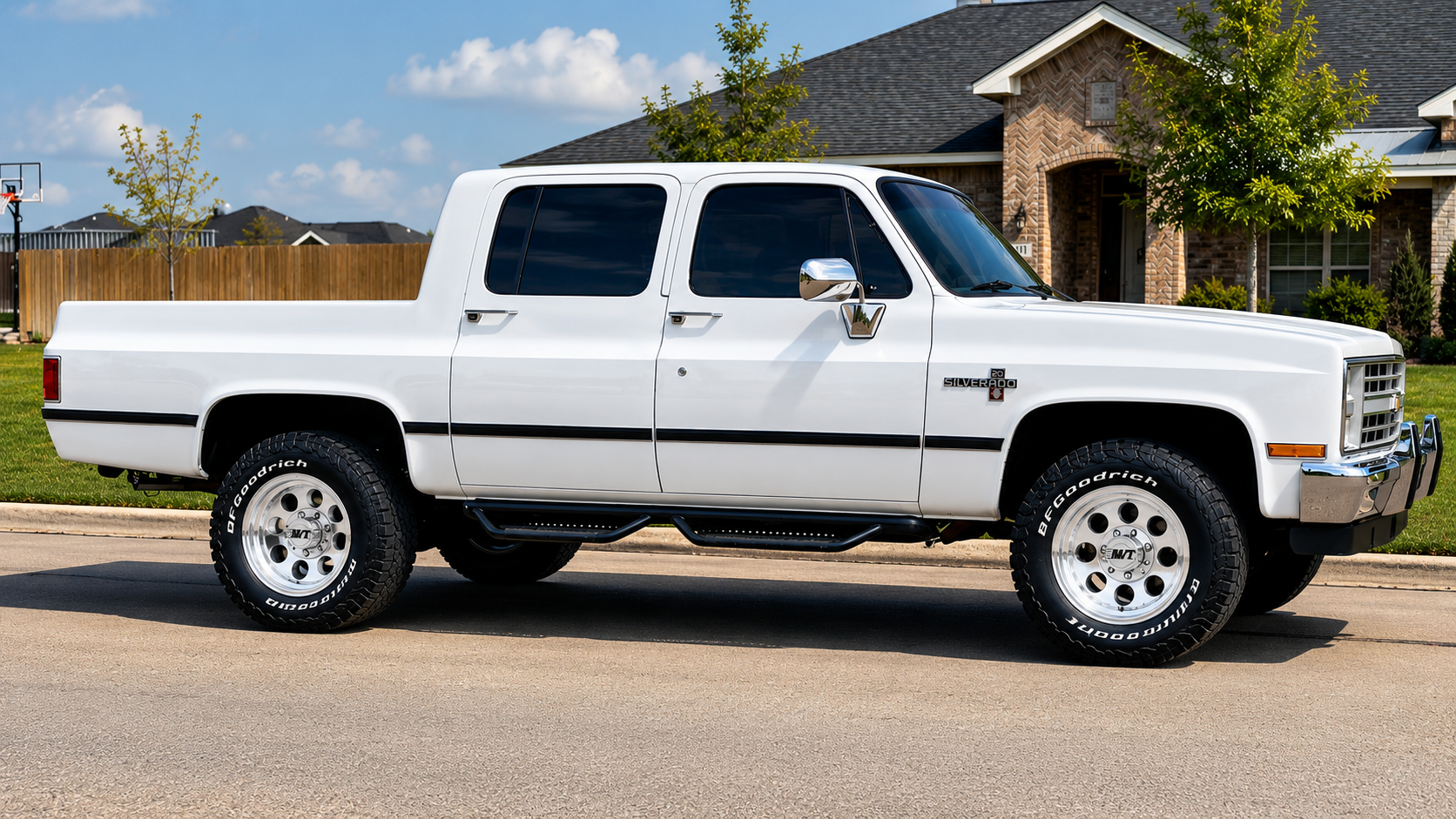
The FlatLander was never intended to be a perfect truck.
Perfection is easy to understand. A perfect truck reveals itself immediately. Every decision is obvious. Every modification is familiar. Every element has already been approved by the collective opinion of enthusiasts.
The FlatLander follows a different path.
Its purpose is not to impress at first glance. Its purpose is to create curiosity.
Most custom vehicles are designed to provide answers.
The FlatLander is designed to create questions.
What is it?
Why does it look familiar and unfamiliar at the same time?
Is it factory?
Was it a prototype?
Why does the front clip feel different?
Why does it take a second look to understand exactly what it is?
Those questions are not flaws.
They are the design.
Every major decision on this build has been made in service of that objective.
The 1989 single-headlight front clip remains because it is one of the few surviving fingerprints of the truck’s earlier life. It is not my favorite Squarebody front-end design. If this project had started with a bare frame and unlimited choices, I may have chosen something else.
But the FlatLander is not an exercise in building the most attractive collection of parts.
It is an exercise in preserving identity.
The front clip remains because it belongs to this truck.
The Scottsdale trim remains because it belongs to the vision.
The chrome bumper remains because it belongs to the era.
The white paint remains because it allows the shape to speak louder than the color.
The truck is strongest when the individual components stop competing for attention and begin serving the whole.
The FlatLander is ultimately an exercise in restraint.
Everywhere the custom truck world tends to add, I have chosen to preserve.
Everywhere the custom truck world tends to explain, I have chosen to imply.
Everywhere the custom truck world tends to shout, I have chosen to whisper.
The goal was never to create the most dramatic version of this truck.
The goal was to create the most believable version of it.
That is why so many of the truck’s defining features are not additions at all.
They are decisions not to replace.
Not to modernize.
Not to smooth over.
Not to force the truck into a more familiar custom-truck formula.
The FlatLander gains its identity from what has been preserved as much as from what has been changed.
That philosophy extends beyond the major decisions.
I have intentionally avoided many of the custom truck trends that dominate modern builds.
Custom billet fender badges.
Overly aggressive graphics.
Attention-seeking paint.
Excessive branding.
The goal has never been to announce what the truck is.
The goal has been to let people discover it.
Discovery creates engagement.
Engagement creates attention.
Attention creates crowds.
Crowds do not form around vehicles that reveal themselves instantly.
Crowds form around vehicles that reward observation.
A person walks by.
They recognize a Squarebody.
Then they realize it is a crew cab.
Then they realize it was a Suburban.
Then they notice the unusual front clip.
Then they notice the trim.
Then they begin connecting the pieces together.
That process takes time.
Time is the most valuable commodity at any show, gathering, publication feature, or online post.
Every additional second a viewer spends looking is another opportunity for interest to grow.
The FlatLander is designed to earn those seconds.
From a distance it is recognizable.
Up close it becomes complicated.
Viewed from different angles it tells different stories.
That is why people will continue walking around it.
That is why conversations will begin.
That is why groups will gather.
That is why photographs will be taken from multiple perspectives.
That is why publications will become interested.
Not because it is the most expensive truck.
Not because it is the most modified truck.
Not because it is the most flawless truck.
Because it possesses something increasingly rare in modern custom vehicle culture:
Mystery.
The FlatLander does not ask for attention.
It creates curiosity.
The greatest compliment this truck can receive is not, “That’s beautiful.”
It is:
“I can’t stop looking at it.”
The FlatLander is not a restoration.
It is not a trend.
It is not a collection of parts.
It’s not intended to feel like a custom truck.
It is a vehicle that feels as though it should have existed.
A forgotten GM prototype.
A special project.
A one-off experiment.
A truck that somehow slipped through history unnoticed.
And for a moment, standing in front of it, people will wonder whether they’re looking at a custom truck…
Or a piece of history they somehow missed.